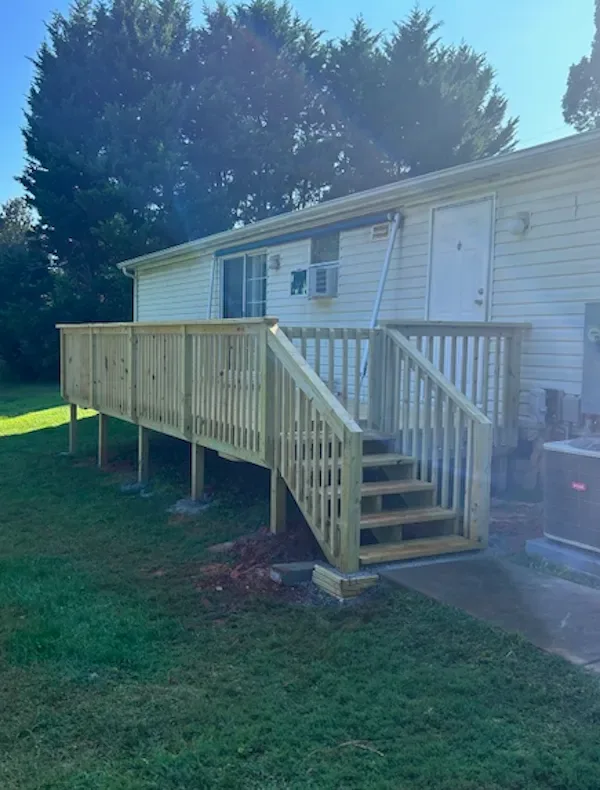
Deck Builders of Maryville designs and builds custom wood and composite decks for homeowners across Blount County — from simple ground-level platforms to elevated multi-level decks with stairs, custom railings, pergolas and covered roofs. Every project starts with a free on-site visit and a written price.
We handle the whole project — design, permitting, construction and cleanup. Wood and composite decks, custom railings, pergolas, covered decks, and repairs to decks that are still structurally worth saving.
Pressure-treated pine and cedar decks — the most affordable way to add real outdoor living space, built to handle East Tennessee humidity and freeze-thaw cycles.
Low-maintenance composite decking that resists fading, mold, insects and splintering — no annual staining, no sealing, no weekends lost to upkeep.
Multi-level layouts, picture-frame borders, two-tone decking, built-in benches, integrated lighting and curved corners — designed around your yard, not a catalog.
Roofed decks, pergolas and covered porches that make outdoor space usable through Tennessee summer heat and afternoon thunderstorms.
Soft boards, a wobbling railing, or a ledger pulling away from the house — we assess the substructure and tell you honestly whether to repair or replace.
New railing on an existing deck is one of the fastest ways to modernize it — and often the difference between a deck that passes inspection and one that doesn't.
Send the form and we'll schedule a visit to see the space, take measurements, talk through material options and understand how you want to use the deck.
You get a detailed written estimate covering scope, materials, layout and price — with options laid out so you can adjust before committing.
We pull the permit for your jurisdiction, order materials, and build. Most residential decks take about one to two weeks once construction starts.
We walk the finished deck with you, clear the site, pass final inspection, and go over how to care for the material you chose.
At Deck Builders of Maryville we build decks for homeowners across Blount County, and we build them one at a time, designed around the house they attach to. Some clients want a straightforward pressure-treated platform off the back sliders. Others want a multi-level composite deck with a picture-frame border, custom railing and a pergola for shade. Both get the same attention to the parts nobody sees: footing depth, ledger attachment and flashing, joist spacing, and stairs that meet code.
Maryville is the seat of Blount County, sitting at roughly 900 feet where the Tennessee Valley starts climbing toward the Great Smoky Mountains. That position shapes everything we build. Head south-east along US-321 — Lamar Alexander Parkway — toward Townsend and the ground rises steadily to the national park boundary; the lots get steeper, and decks stop being platforms and become structures with tall posts, deeper footings and long stair runs. Out along the US-129 Alcoa Highway corridor and around McGhee Tyson, the valley floor is comparatively level, which means lower decks and shorter stairs. Two projects the same size on those two lots are not the same job, and they should not carry the same price.
The weather is the other constant. East Tennessee takes well above the national average in annual rainfall, our summers are humid, and at this elevation winter delivers genuine freeze-thaw cycling rather than one hard freeze. That combination is what actually kills decks here — water sitting in board checks and freezing, footings lifted by frost, humid air trapped under a sealed low deck, mildew on any surface that never fully dries under mature canopy. Every one of those has a design answer: footings carried below frost depth, joist tape, real perimeter ventilation, correct board spacing, and flashing done properly the first time.
It is also why the material conversation matters more here than in a drier climate. Wood decking is the most affordable way to get the space you want, and a well-built pressure-treated deck lasts a long time — but here it comes with a maintenance schedule attached, and that schedule is shorter than most people expect. Composite decking costs more up front and gives most of that time back, resisting moisture, mold, insects and UV fading without annual refinishing. Neither is automatically right; it depends on your budget, how long you plan to stay, and how you feel about spending a weekend re-staining.
Permitting is worth knowing about before you start, because Blount County is not one jurisdiction. Addresses inside Maryville city limits permit through the City of Maryville. Alcoa — laid out in the late 1910s as a planned town for the aluminum works and still its own municipality — runs its own building and codes department. Everything outside those city limits goes through the county. Neighbouring streets can answer to different offices, and filing with the wrong one surfaces at inspection, which is an expensive time to find out. We confirm the jurisdiction for your address before quoting and handle the permit either way.
Every project starts with a free on-site estimate. Someone comes out, looks at the actual grade and access, discusses what you have in mind, and follows up with a written price. No obligation and no pressure to decide on the spot — and if what you want lands above budget, we will show you what adjusting size, material or railing would do to the number.
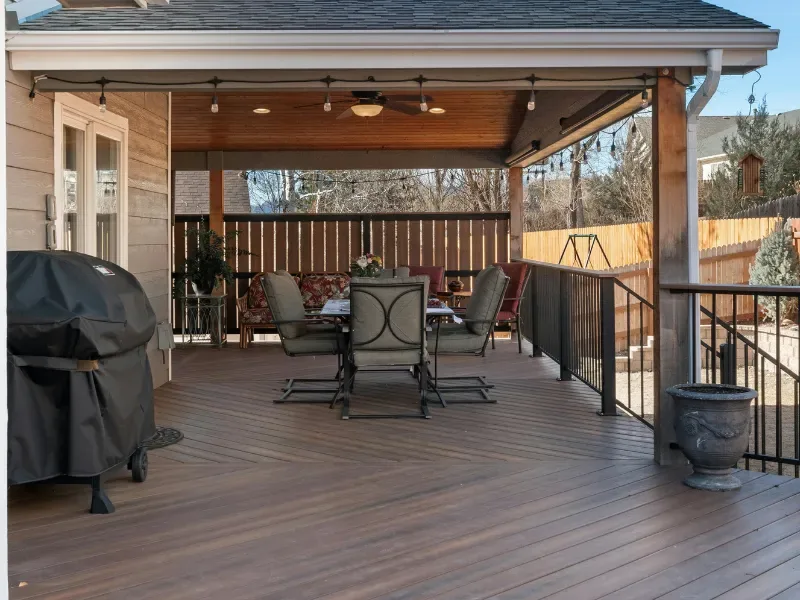
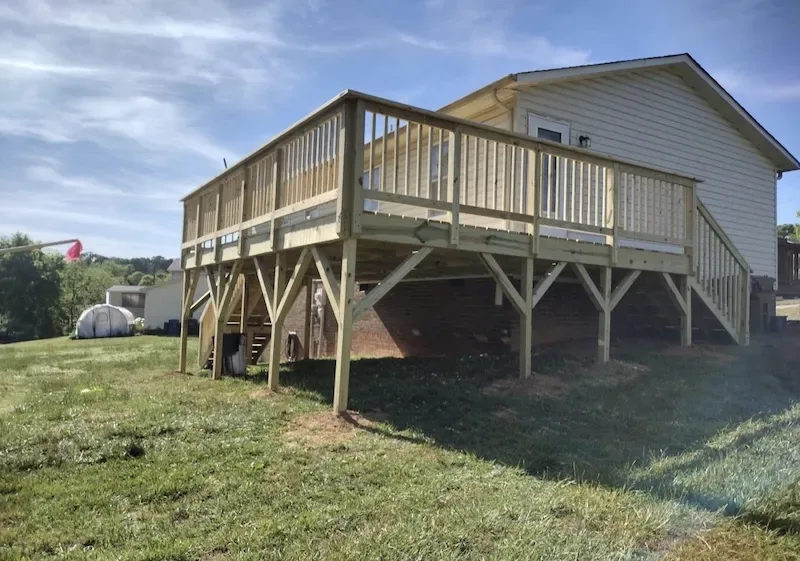
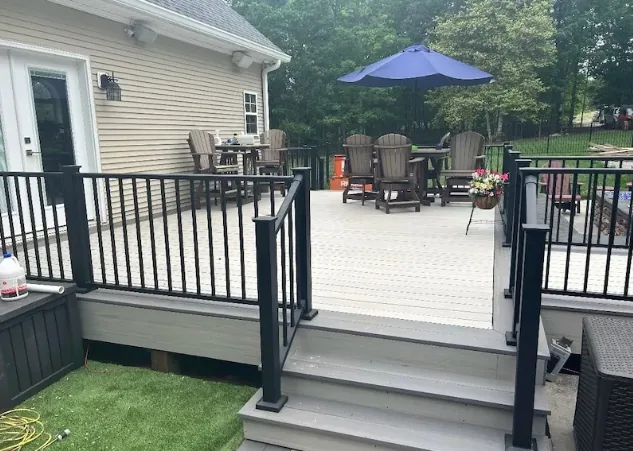
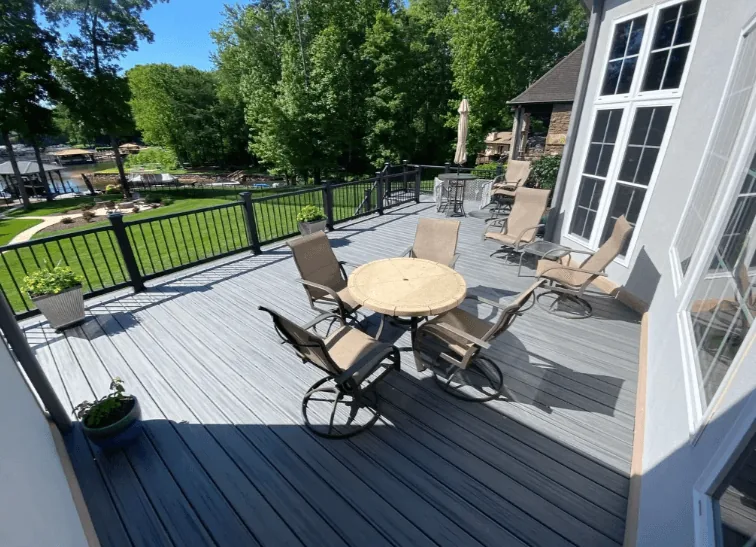
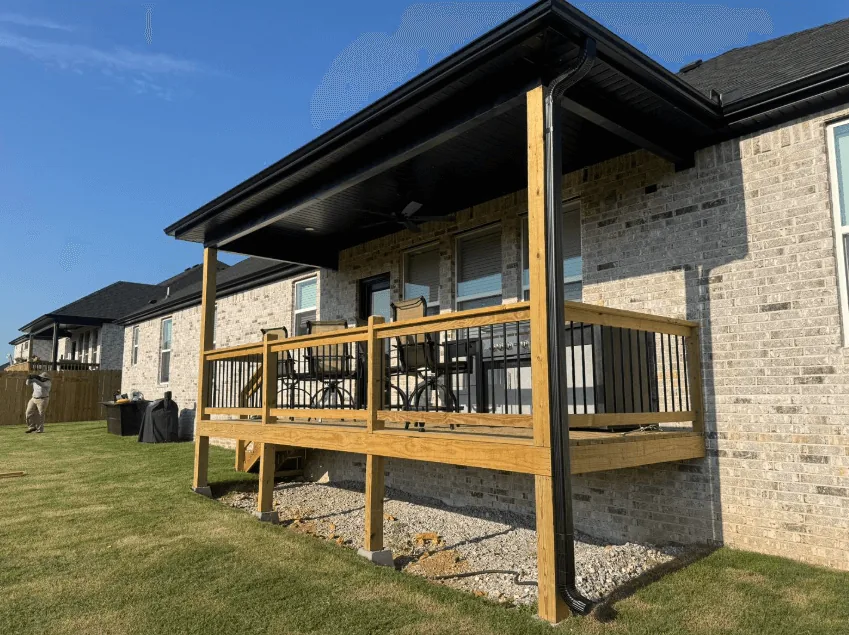
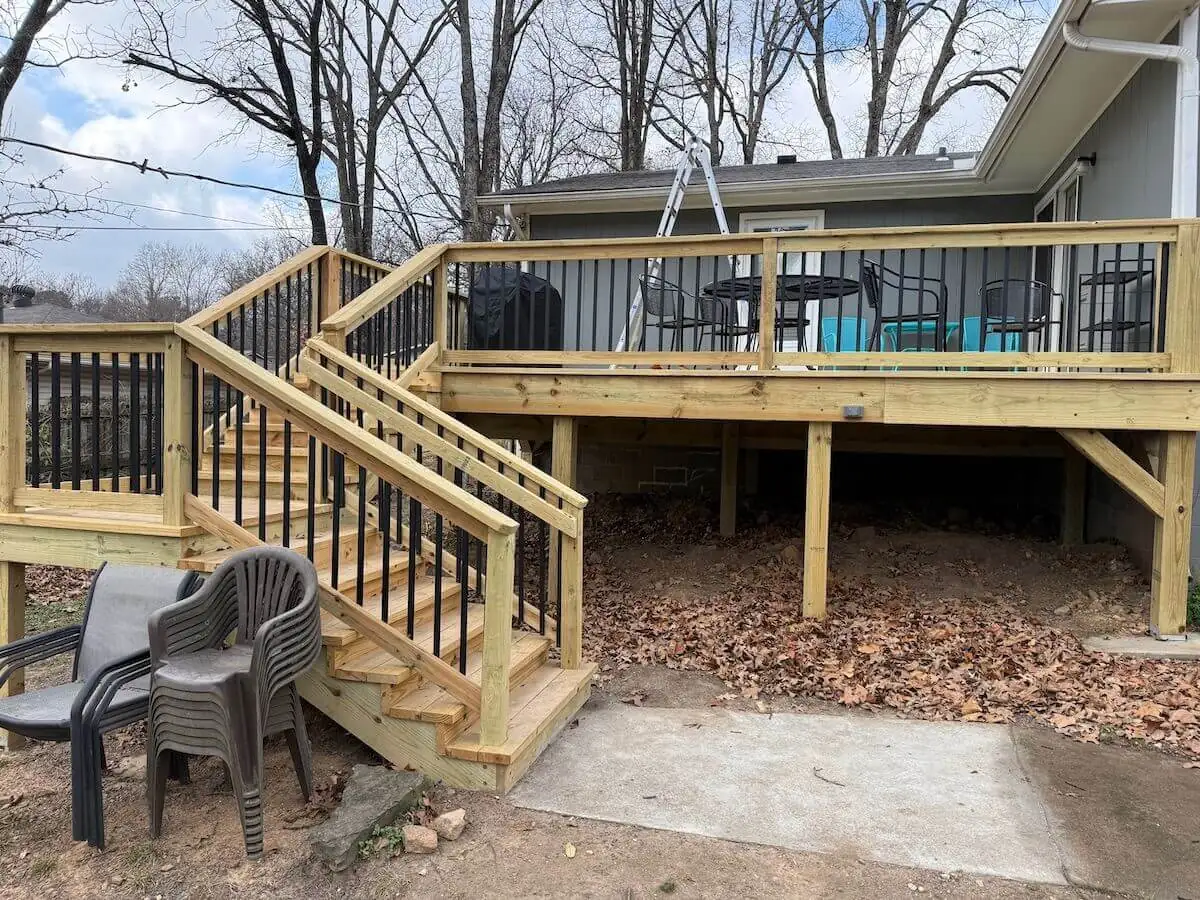
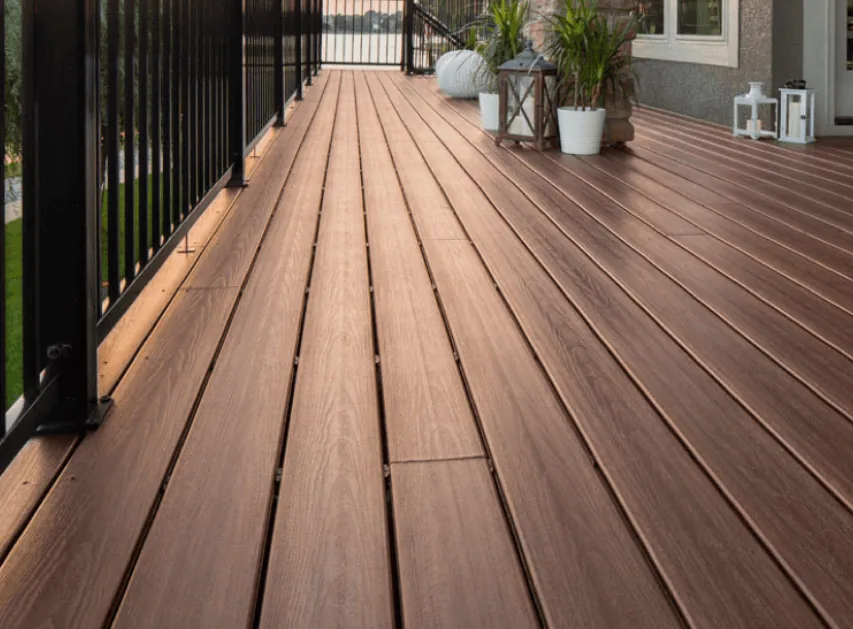
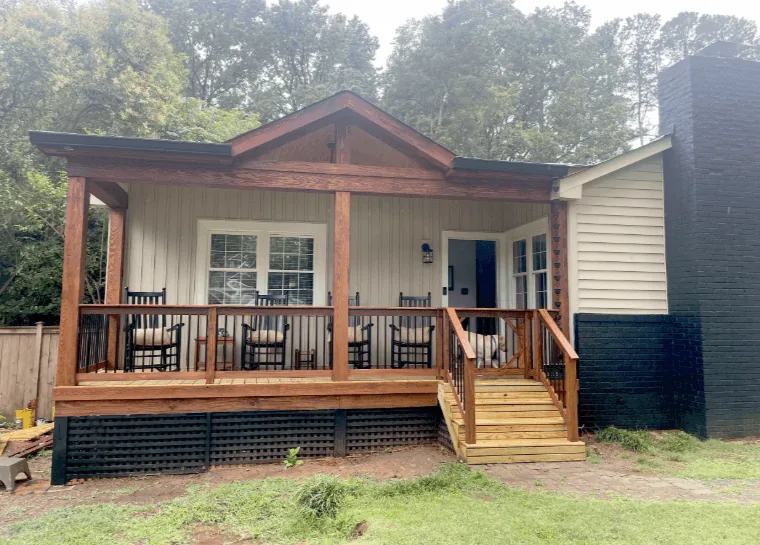
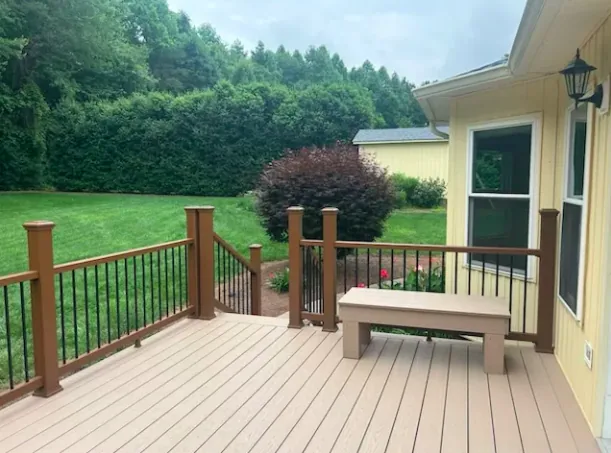
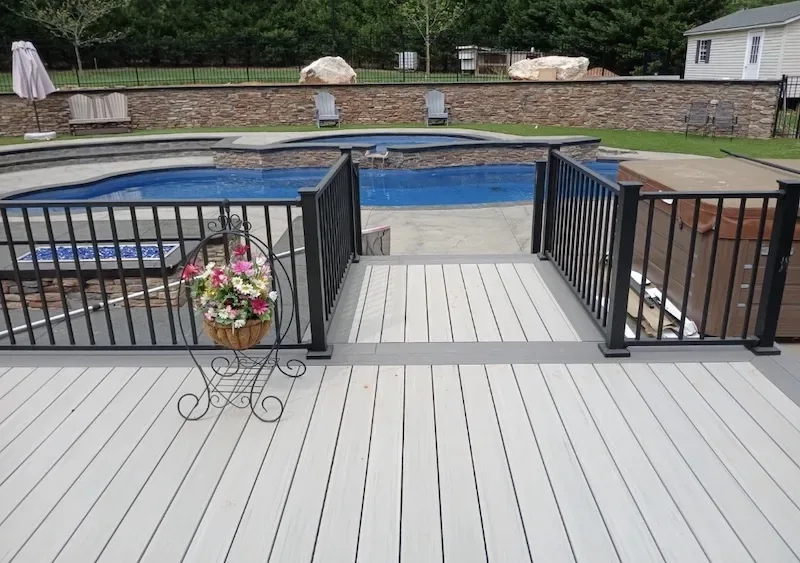
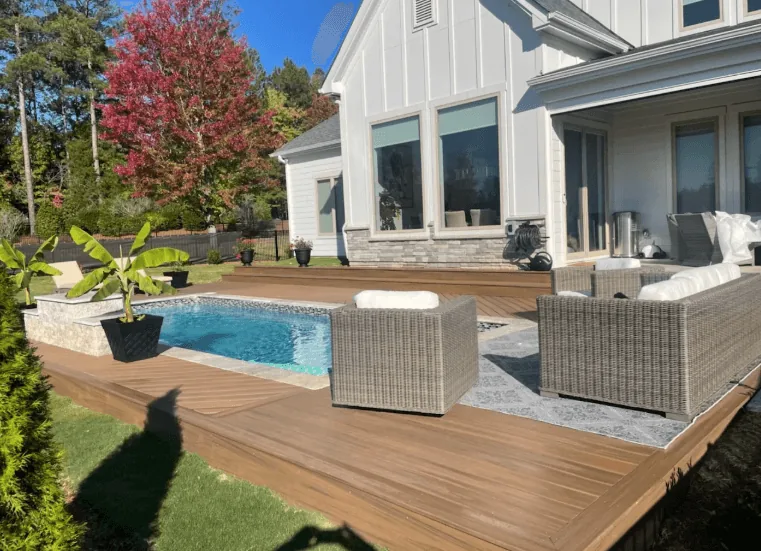
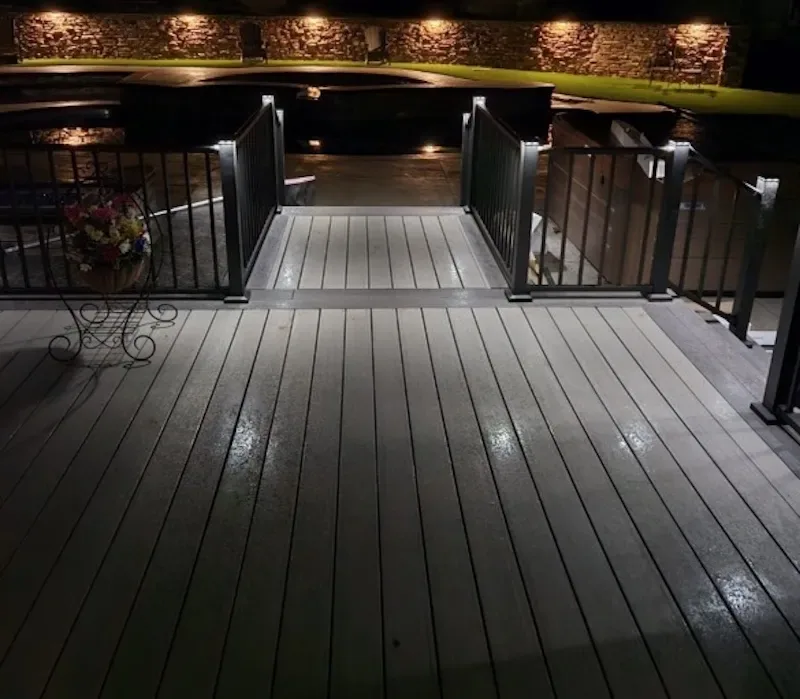
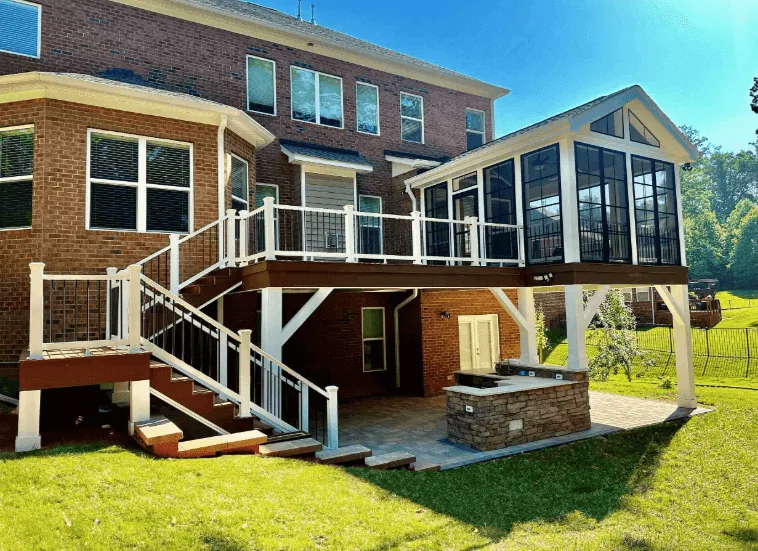
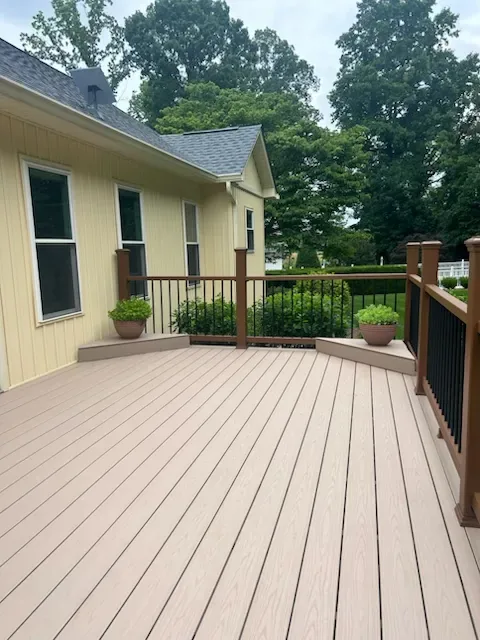
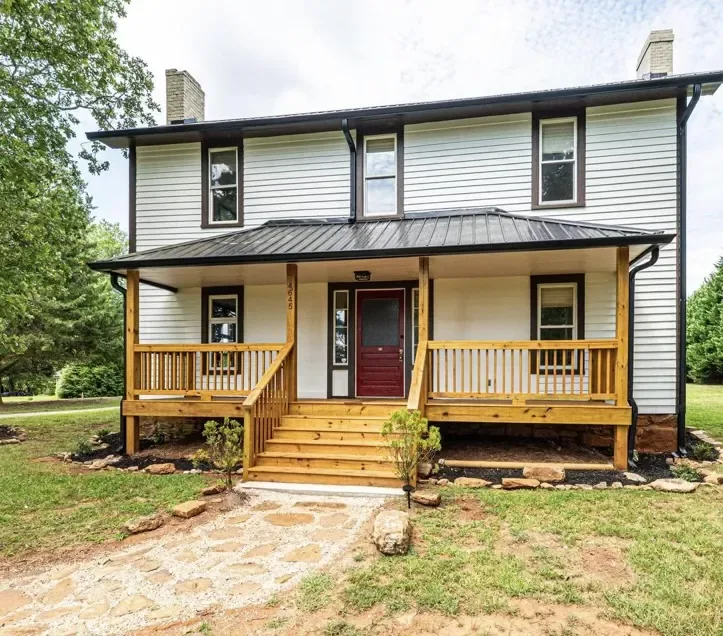
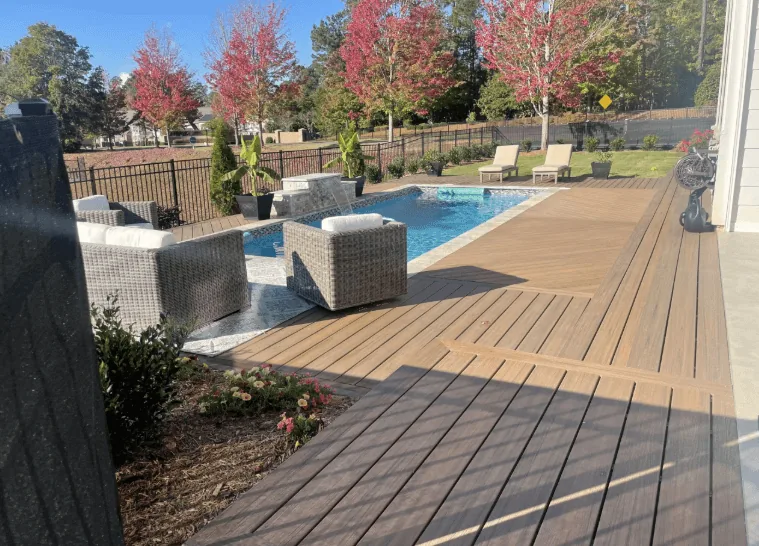
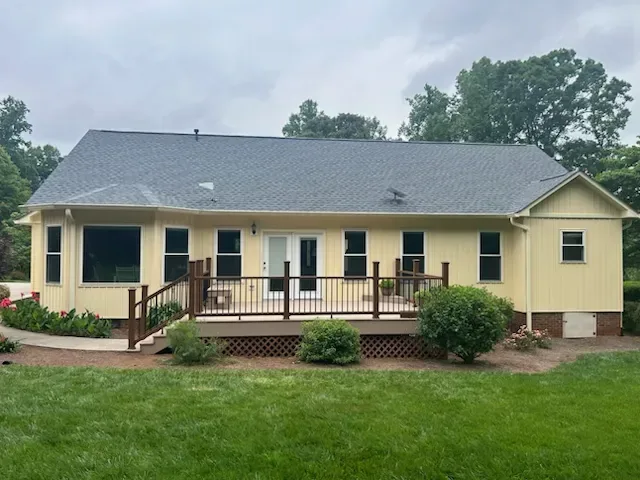
Wood and composite decks, covered decks, pergolas, railing systems and lighting — examples of the styles and finishes available for your project.
These images show the styles, materials and finishes we work with so you can identify what appeals to you before your estimate. They are reference photography, not a portfolio of completed local jobs.


Deck cost comes down to two things: the decking material, and how much structure has to go underneath it. The ranges below cover a typical single-level deck of roughly 240–320 square feet (about 12'×20' to 16'×20') including railing, on a standard Blount County lot.
The most affordable way to get real outdoor space. Lasts a long time when maintained, but needs cleaning and re-sealing or re-staining on a regular cycle in our humidity.
Entry-tier capped composite. Ends nearly all the annual maintenance and resists moisture, mold, insects and splintering, with a shorter fade-and-stain warranty than premium lines.
Premium capped composite with deeper wood-grain texture, wider color range and the longest fade-and-stain warranties — usually paired with aluminum or cable railing.
Height above grade. This is the single biggest swing on a Blount County lot. A deck sitting eight feet up needs taller posts, larger and deeper footings, lateral bracing and a full stair run — substantially more structure before a single deck board goes down. Two decks of identical square footage, one on flat ground and one on a graded lot, are not the same job.
Stairs and railing. A long stair run is one of the more expensive elements per foot on any deck, and railing choice moves the total more than most people expect — cable and aluminum systems cost considerably more than wood pickets, though they open up the view.
Structure you can't see. Pouring new concrete footings, replacing a rotted ledger, or correcting flashing that was never done properly all add cost, and none of it is visible in the finished deck. It is also the work that decides whether the deck is still sound in fifteen years.
Complexity. Fully custom designs — multi-level layouts, picture-frame borders, built-in seating, integrated lighting, curved corners — generally add roughly 25% to 35% over a comparable basic build. Add a pergola or a full covered roof and the total moves again, because the roof load has to be carried down through the posts into the footings.
Straight answers about building a deck in Maryville and Blount County. If your question isn't covered here, send it through the estimate form.
Deck Builders of Maryville is a custom deck contractor serving Maryville and all of Blount County, Tennessee, building wood and composite decks, custom railings, covered decks, pergolas and deck repairs. Rather than asking who is "best", the more useful question is what actually separates a good deck builder from a cheap one — and almost all of it is invisible once the deck is finished: footings carried below frost depth so freeze-thaw cannot lift them, a ledger board correctly fastened and flashed so water cannot track into the band board of the house, joists detailed to shed water, consistent stair riser heights through every run, and guards at code height with correctly spaced balusters. Those are the specifics worth asking any contractor about before you sign. Concretely, here is what we offer: free on-site estimates with no obligation; a written proposal with scope, materials and price spelled out; permitting handled across all three Blount County jurisdictions; typical build times of one to two weeks once construction starts; and honest repair-versus-replace advice, including telling you when your existing frame only needs re-decking, which costs a fraction of a full rebuild. Typical projects run $4,000 to $12,000 in pressure-treated wood and $9,000 to $28,000 or more in composite, depending on size, elevation and railing.
A typical single-level deck of roughly 240 to 320 square feet including railing runs about $4,000 to $12,000 in pressure-treated wood, $9,000 to $18,000 in base-level composite, and $16,000 to $28,000 or more in high-grade composite. Fully custom designs — multi-level layouts, picture-frame borders, integrated lighting, curved corners — generally add roughly 25% to 35% over a comparable basic build. The biggest single variable on a Blount County lot is height above grade, because an elevated deck needs taller posts, larger footings and a full stair run before any decking goes down. We give a written price after a free on-site visit rather than quoting blind.
In most cases, yes — and which office issues it depends on where your home sits. Properties inside Maryville city limits permit through the City of Maryville, properties in Alcoa through the City of Alcoa, and properties in unincorporated Blount County through the county building and codes office. As a general rule, a deck that attaches to the house, sits more than about 30 inches above grade, or exceeds roughly 200 square feet will need a permit and inspection. We confirm the requirement for your specific address and handle the permitting as part of the project.
Both work here. Pressure-treated pine is the most affordable route and lasts well when maintained, but it needs cleaning and re-staining or re-sealing on a regular cycle to handle our humidity and rainfall. Composite costs more up front and removes nearly all of that upkeep, resisting moisture, mold, insects and UV fading. If lowest initial cost matters most, go wood. If you'd rather not spend weekends maintaining a deck, composite usually wins over the deck's life.
Once construction starts, most residential decks finish in about one to two weeks. The timeline depends on size, elevation, whether a pergola or covered roof is included, and how quickly permits and inspections move in your jurisdiction. Spring and early summer are the busiest booking months in Blount County, so fall and winter projects usually get on the schedule sooner.
Replace when the problems are structural; repair when they're cosmetic. Signs pointing to replacement: soft or rotted joists and framing, a ledger board pulling away from the house or that was never properly flashed, footings that have shifted, or rot at the base of posts. Faded, splintered or weathered boards sitting on a sound frame usually just need re-decking — a much cheaper job. We inspect the substructure during the free visit and give you a straight answer.
Maryville plus communities across the county, including Alcoa, Eagleton Village, Louisville, Friendsville, Rockford, Townsend, Walland, Wildwood, Tallassee, Montvale, Little River, Happy Valley, Sixmile, Springbrook, Bethel and Fairview, along with the surrounding neighborhoods and subdivisions. If you're not sure your address falls in our area, send it through the form and we'll confirm.
Ledger attachment and flashing. The ledger fastens the deck to the house and carries an enormous share of the load. Fastened with the wrong hardware or left unflashed, it both risks structural failure and channels water into the band board of the house itself — turning a deck problem into a house problem. It's also invisible once the deck is finished, which is exactly why it gets skipped.
Deck Builders of Maryville works throughout Blount County, Tennessee — from Maryville and Alcoa out to the communities along the edge of the Great Smoky Mountains. Select any community below for details on deck building in that area.
Tell us about your project and we'll get back to you the same day. No high-pressure sales, no surprise fees — a thorough on-site look at your space and an honest written price.